
How Do Porta Potties Work Day To Day?
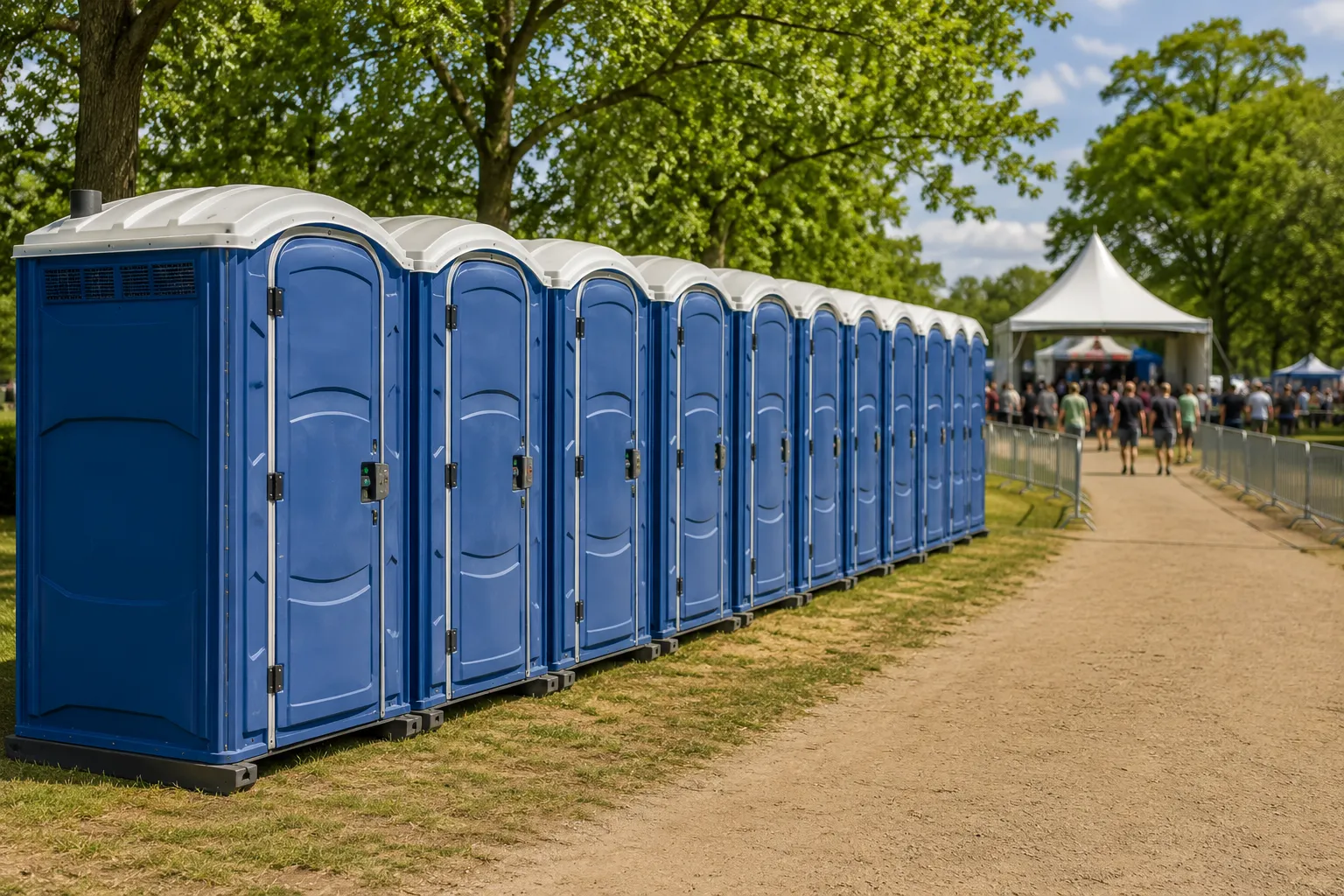
The basic unit is a box over a holding tank, with a seat, a vent stack and a supply of toilet paper. No water goes in, no water comes out. Waste and the blue chemical sit in that tank until the truck comes. A standard porta potty rental stands about 92 inches tall and covers roughly 44 by 48 inches of ground, which is why placement on a gravel pad or level slab matters more than people expect. ANSI/PSAI Z4.3, the industry service standard, sets a baseline of one visit per week for up to 10 users over a 40 hour work week. On a busy Aurora job site that interval often needs to shrink. If you're not sure how many units your crew needs, the porta potty placement guide and the how many porta potties do I need page both walk through it. A construction site services contract usually bundles delivery, weekly service and pickup into one schedule.
How Do Flushable Porta Potties Work?
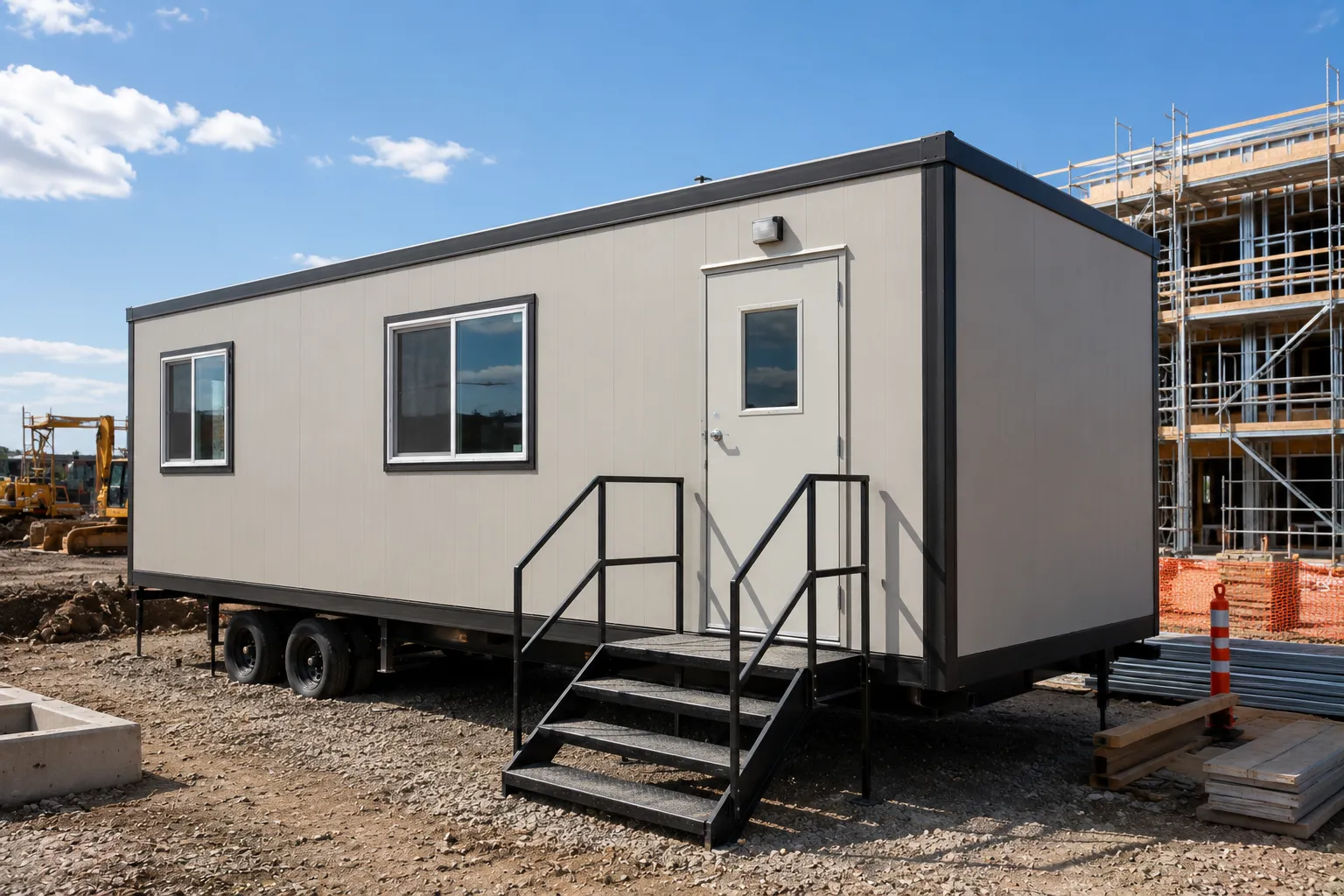
A deluxe flushable unit uses a small onboard freshwater tank and a hand or foot pump to push a rinse of water into the bowl, which drops waste into a separate holding tank below. It's a closed loop, not a sewer connection. That's the difference between a deluxe flushable porta potty and a standard chemical unit: a flush cycle instead of straight drop, plus usually a sink. Restroom trailers work the same way but scaled up, with multiple stalls tied into onboard fresh and gray water tanks. Aurora couples and event planners booking a wedding restroom rental or a restroom trailer rental get real flush toilets, running water and sometimes climate control, which is why trailers cost more than a basic unit over the same weekend.
How Does a Portable Sink Work?
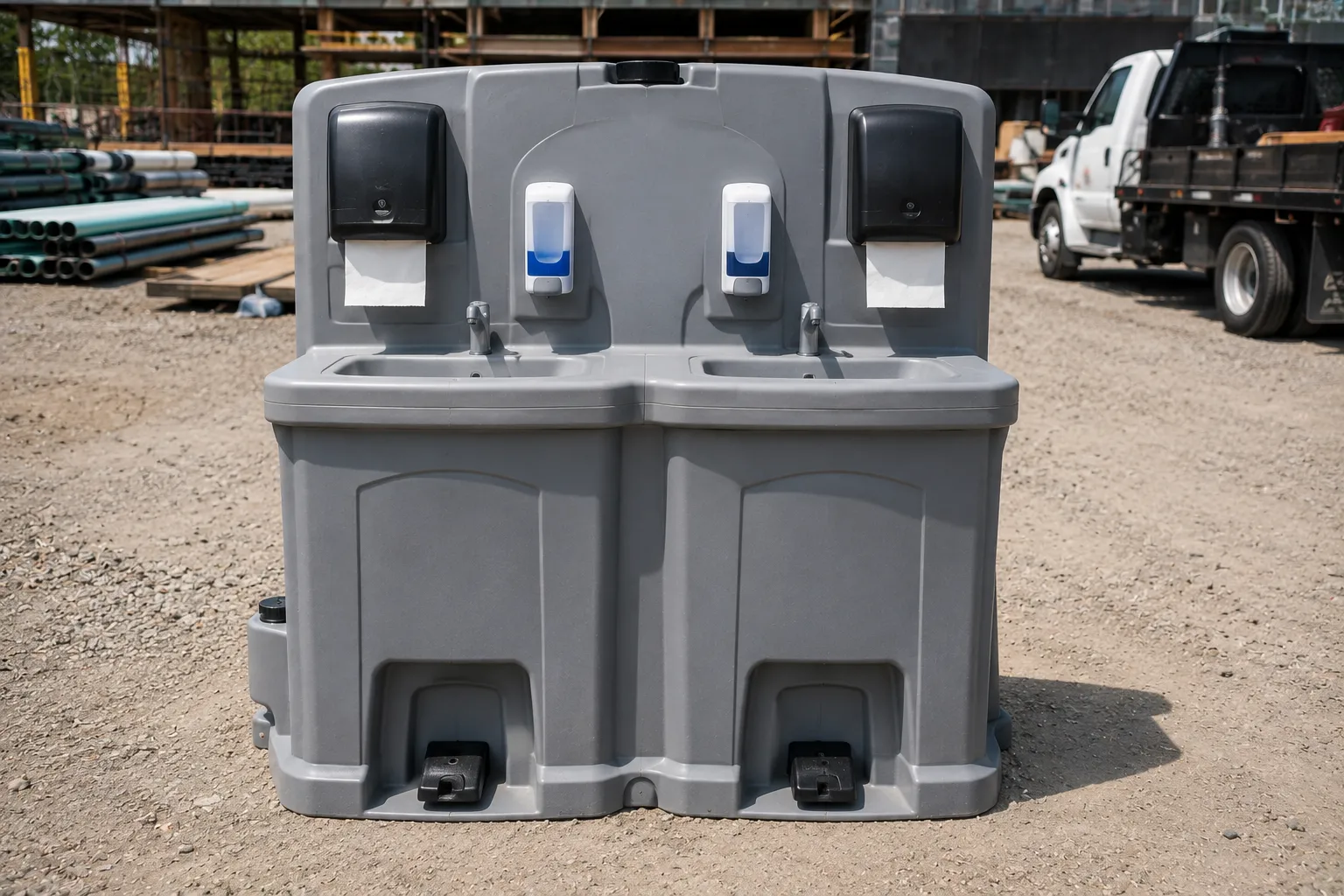
A portable handwashing station carries its own fresh water in an onboard tank, gravity-feeds it through a foot pump or sensor tap, and drains the used water into a separate gray tank underneath. No plumbing, no hose bib required. Under 29 CFR 1910.141(d)(2), a handwashing setup needs actual soap and towels or a hand-drying device; hand sanitizer alone doesn't satisfy that standard. That's a meaningful distinction for contractors comparing a handwashing station rental against a hand sanitizer station rental for a permitted job site. OSHA 1926.51(f)(1) requires washing facilities specifically where workers apply paints, coatings, herbicides or insecticides, or handle other harmful contaminants, so a painting crew or a pesticide crew needs real washing capability, not just gel. A portable sink rental covers both the OSHA angle and the simple courtesy angle at a food booth or fairground.
Do Porta Potties Work the Same for Construction and Camping?
They run on the same tank-and-chemical system either way, but the load is different. Picture a construction worker running to the porta-potty between pours, sometimes a dozen times a shift across a full crew; that unit needs frequent service and a tank sized for volume, which is why OSHA 1926.51(c) sets a ratio of one toilet for 20 workers or fewer on a job site, scaling up as the crew grows. A camping porta potty or event unit sees lighter, more spread-out use, so the same 60 to 70 gallon tank stretches further between pumps. Both situations depend on the chemical doing its job: a blue portable toilet chemical breaks down solids and controls odor between services, similar in principle to a septic tank cleaning chemical used at a house, though the tank sizes and service intervals differ completely. Renters searching "portable toilet chemicals near me" are usually trying to solve an odor problem mid-rental, and that's a service-frequency issue First Choice Porta Potty handles by adjusting the pickup schedule, not a product you buy separately. For ongoing job sites, the emergency porta potty rental option covers a unit that's filling faster than expected.
Unit Comparison at a Glance
| unit type | typical duration | starting price | notes |
|---|---|---|---|
| standard | day | $150 | chemical tank, no water |
| standard | week | $200 | most common construction rental |
| deluxe flushable | week | $250 | onboard flush and sink |
| ADA accessible | week | $185 | meets ADA Standards 213.2 clustering rule |
| restroom trailer | week | $1,397 | multi-stall, flush, running water |
Every ADA accessible porta potty on an Aurora site has to meet a 60 inch turning circle per ADA Standards 304.3.1, and where units are clustered, at least 5 percent must be accessible under section 213.2. For exact numbers by job size, the porta potty rental cost and porta potty rental per day pages break down pricing further.
What's inside a porta potty besides the tank?
Just a seat, a toilet paper holder, a vent stack to the roof, and the holding tank below with chemical already added at delivery. There's no light and no running water in a standard unit. A porta john rental delivered to an Aurora address arrives ready to use immediately.
How often does First Choice Porta Potty service a unit?
The baseline is one pump-out per week per ANSI/PSAI Z4.3, based on 10 users over a standard 40 hour week. High-traffic sites in Aurora or nearby Naperville, about 8.3 miles east, often move to twice-weekly service.
Can a porta potty freeze in winter?
Yes, the chemical mix and tank contents can freeze in sustained cold, which slows breakdown and can crack fittings. The porta potty in winter page covers heated units and antifreeze additives for Aurora's colder months.
Do camping porta potties need a chemical refill?
Yes, every service visit includes fresh chemical along with the pump-out, whether it's a job site unit or a camping porta potty at a weekend event. Skipping a scheduled service is what causes odor complaints.
Is a portable sink required alongside a porta potty?
Not automatically, but OSHA 1926.51(f)(1) requires washing facilities when workers handle paints, coatings, herbicides or insecticides. Check handwashing requirements or request a quote through First Choice Porta Potty to confirm what your Aurora site needs.
Next step
Get a delivery date
Tell us the address, the dates and the headcount. We size the order and confirm the route.